In the rapidly-evolving landscape of Saudi business, companies today must navigate a complex array of government portals such as Qiwa, Muqeem, and Mudad to ensure full legal compliance. As the demand for digital transformation grows, these portals play a critical role in streamlining processes, facilitating immigration paperwork, employment verification, and wage protection – all essential for companies operating within the Kingdom. Mastering “dealing with government portals such as Qiwa, Muqeem, and Mudad, and companies’ legal compliance” is pivotal for minimizing risk, meeting regulatory standards, and maintaining seamless business operations. This article explores how organizations can successfully engage with these platforms to fulfil their legal obligations, avoid costly penalties, and foster best compliance practices in line with Saudi labor and regulatory frameworks.
Understanding the Role of Government Portals in Corporate Compliance
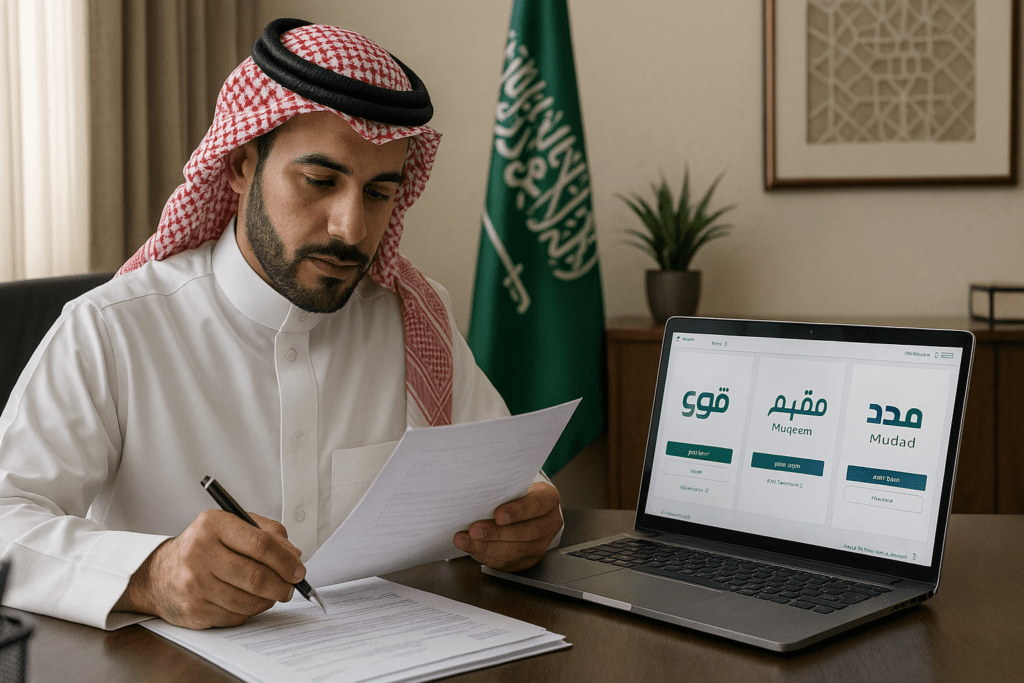
Government portals like Qiwa, Muqeem, and Mudad form the backbone of legal and labor compliance in Saudi Arabia. Each portal has a specific function, supporting businesses in aligning with Ministry of Human Resources and Social Development (MHRSD) mandates and related legal requirements. Below, we summarize their core roles:
- Qiwa: Handles labor-related processes, work permits, contract authentication, organization profiles, and Saudization quotas.
- Muqeem: Focuses on residency and immigration services for expatriate employees, such as Iqama issuance, renewals, and transfers.
- Mudad: Streamlines wage protection, payroll compliance, and ensures adherence to wage standards.
Efficient utilization of these portals reduces administrative burden while ensuring that businesses meet evolving legal expectations related to labor rights, expatriate management, and financial transparency.
Navigating Qiwa: The Digital Gateway to Labor Compliance
Qiwa is the central portal for labor force management in Saudi Arabia. Designed to digitalize and centralize employment-related processes, Qiwa provides tools for maintaining organizational compliance with labor laws. Properly dealing with Qiwa involves several mandatory steps:
- Work Permit Issuance and Renewal: Companies must use Qiwa to issue and renew work permits, ensuring all employees are legally registered.
- Employment Contract Authentication: Employment contracts must be configured and authenticated through the system to protect both employer and employee rights.
- Saudization Monitoring: The portal assists organizations in achieving their Saudization quotas, a key compliance requirement in the Kingdom.
To remain compliant, companies need to frequently update employee data, process regulatory changes promptly, and ensure that all labor-related activities are logged within Qiwa. Not adhering to these practices may expose businesses to fines, suspension of services, or other legal sanctions. Within the broader compliance ecosystem, this portal is supplemented by internal HR protocols and legal review systems. LSI keywords such as “labor law,” “employment lawyer,” and “labor court KSA” are highly relevant in this context.
Muqeem: Managing Expatriate Residency and Immigration Compliance
For organizations employing expatriates, Muqeem is an essential portal for residency and immigration paperwork. The platform integrates with the General Directorate of Passports (Jawazat) and Ministry of Interior, enabling businesses to complete the following:
- Issuing and Renewing Iqama: Regular updates are required for expatriate residency permits.
- Transfer of Sponsorship: Facilitates legal transfer of employee sponsorships between organizations, ensuring accuracy in immigration status.
- Reporting Employee Departures or Status Changes: All changes in residency or employment status must be reported through Muqeem for compliance and audit purposes.
Dealing with government portals such as Qiwa, Muqeem, and Mudad, and companies’ legal compliance also means staying updated with frequent regulatory amendments in Saudi Arabian labor and immigration laws. Companies must track digital footprints and document submissions, keeping their records current in the event of an audit or dispute.
Mudad Platform: Ensuring Wage Protection and Payroll Compliance
Mudad is an innovative platform designed to monitor wage payments and reinforce payroll transparency, a cornerstone of labor law compliance in Saudi Arabia. By interfacing with banks and corporate payroll departments, Mudad enables:
- Automated wage protection verification, confirming that salaries are paid on time and according to contract terms.
- Tracking discrepancies between reported wages and actual transfers, flagging potential labor violations.
- Generating compliance reports required by the Ministry of Human Resources.
Failure to utilize Mudad or incorrect reporting can lead to wage claims, labor court cases, or regulatory penalties.
Legal Obligations: What Does Full Compliance Involve?
Complying with Saudi regulations is not limited to process automation; it encompasses a broad spectrum of legal duties that businesses must uphold. Here’s what full legal compliance generally requires from companies interacting with Qiwa, Muqeem, and Mudad:
- Accurate record-keeping for all employees, both nationals and expatriates, in all government portals.
- Timely submission of permits, contracts, and wage documents.
- Verification of employee identities and legal work status through official systems.
- Immediate reporting of changes in employment, residency, or payroll status.
It is also critical to create internal compliance checklists and conduct regular legal reviews of all portal submissions. This approach helps mitigate risks of non-compliance, which may result in fines, business interruptions, or loss of licensure.
Challenges Companies Face: Common Pitfalls and Solutions
Adopting government portals for compliance is not without obstacles. Among the most common legal and operational challenges are:
- Technical Errors: System downtime, incorrect uploads, or misalignment between portal data and internal HR records.
- Regulatory Changes: Frequent amendments in labor requirements necessitate ongoing staff training and legal oversight.
- Document Discrepancies: Inaccurate contract entries or outdated Iqama statuses leading to investigation or penalties.
- Lack of Integration: Challenges linking internal payroll systems with mandated governmental platforms.
Proactively overcoming these pitfalls requires robust legal counsel, updated policy manuals, ongoing technical training, and scheduled compliance audits.
Contact us on WhatsApp to book a legal consultation
Best Practices: How Organizations Can Optimize Compliance Processes
To ensure ongoing compliance and minimize business risks, companies should implement the following best practices:
- Designate a compliance manager responsible for overseeing all portal transactions and legal notifications.
- Integrate internal HR/payroll systems with governmental portals for real-time data sharing.
- Perform frequent self-audits to identify and address gaps in documentation or reporting.
- Establish clear policies for employee onboarding, contract amendments, and termination processes, all aligned with digital submissions.
- Consult with experienced legal professionals to interpret new regulations promptly.
These proactive measures help maintain the integrity of company processes while ensuring that interactions with Qiwa, Muqeem, and Mudad uphold Saudi legal requirements.
The Importance of Legal Guidance in Portal Integration
Digital compliance does not eliminate the need for professional legal advice. Laws continue to evolve, and technology can present new legal ambiguities. Collaborating with law firms—such as Turki Al-Juraiss Law Firm—helps organizations interpret regulations, appeal administrative penalties, and defend their interests in disputes arising from portal-related errors.
Regulatory Trends: Future Compliance Requirements in Saudi Arabia
As Saudi Arabia pursues Vision 2030 objectives, further updates to labor, residency, and payroll digitally are expected. Companies must anticipate tighter reporting deadlines, more frequent system audits, and the possibility of AI-driven compliance analytics. Remaining compliant will require ongoing investment in legal expertise, technology upgrades, and staff training.
Companies proactive about “dealing with government portals such as Qiwa, Muqeem, and Mudad, and companies’ legal compliance” will be best positioned for stability and growth in this dynamic environment.
Conclusion
Mastery of government portals such as Qiwa, Muqeem, and Mudad is now essential for successful legal compliance in Saudi Arabia. Companies that embrace these digital platforms, maintain rigorous internal controls, and seek regular legal advice remain best protected against regulatory risks and operational setbacks. Dealing with government portals such as Qiwa, Muqeem, and Mudad, and companies’ legal compliance should be a core part of every business strategy as new laws and requirements develop.